A no-contact order can change your life overnight, and the Law Office of David A. Nelson helps people in Whatcom County understand exactly what one requires. Many people face new charges not because of the original accusation, but because they misunderstood the order itself.
No-contact orders are common in Washington criminal cases, especially those involving domestic violence. They sound simple, but the details trip up well-meaning people every day. Here's a clear look at what a no-contact order really means and the mistakes that lead to new charges.
What Is a No-Contact Order?
A no-contact order is a court order that prohibits you from contacting a specific person while a criminal case is pending. Courts often issue these orders in domestic violence cases, and Washington addresses them in RCW 10.99.040, part of the state's domestic violence response law.
The order can come into play early. A court may prohibit contact as a condition of release, and it decides at arraignment whether to issue or continue an order while the case moves forward. The order typically stays in effect until the case resolves, and it ends if the defendant is acquitted or the charges are dismissed.
A no-contact order is different from a civil protection order that someone might request on their own. This type arises within a criminal case, and the court controls it. A Bellingham criminal lawyer can help you understand which kind of order applies to your situation and what it requires.
Related: Got a Call From a Whatcom County Detective? What to Do Before You Say a Single Word

What "No Contact" Actually Prohibits
The phrase "no contact" is broader than many people expect. It usually means no contact of any kind, direct or indirect. That includes far more than showing up in person.
Depending on the order's terms, prohibited contact can include calling, texting, emailing, messaging through apps, and reaching out on social media. It can also include indirect contact, such as asking a friend or family member to pass along a message. The order may also require you to stay a certain distance away from the protected person's home, workplace, or school.
Read the Order Carefully
Every order is specific, and the exact terms matter. Some orders prohibit all contact, while others allow limited contact for narrow purposes, such as arranging care for children. Because the wording controls what you can and can't do, reading it closely is essential. A Bellingham criminal defense attorney can walk through the order with you so you understand its precise limits.
The Mistakes That Lead to New Charges
Here's the part that catches people off guard. Violating a no-contact order is a separate criminal offense, and the order itself states that violation can lead to arrest. That means a violation can create an entirely new charge on top of the original case, even if the first case later works out in your favor.
Understanding the common mistakes helps you avoid them.
Responding When the Other Person Reaches Out
This is the single most common and most damaging mistake. If the protected person contacts you first, responding still violates the order. The obligation falls on you, the restrained person, not on them. A text that simply says "please stop texting me" can still count as contact. The safest response to any outreach is no response at all.
Assuming the Other Person Can Cancel the Order
Many people believe that if the protected person doesn't want the order, it goes away. That isn't how it works. Only the court can modify or lift a no-contact order. The protected person cannot give you permission to contact them, and their invitation does not make contact legal. If the order needs to change, that request goes through the court, often with the help of an attorney.
Indirect and Third-Party Contact
Asking someone else to deliver a message, or communicating through a mutual friend, can violate the order just as direct contact would. Even liking or commenting on the protected person's social media posts can be treated as contact. If you're unsure whether something counts, the cautious choice is to avoid it.
Going to Shared or Familiar Places
If you share a home, workplace, or routine with the protected person, an order can be especially difficult. Returning to a shared residence, showing up at their job, or appearing at places you know they'll be can all lead to problems. When belongings, housing, or children are involved, an attorney can help you address those needs through proper legal channels rather than risking a violation.
Related: Accused of Domestic Violence in Washington? The First 72 Hours That Shape Your Entire Case
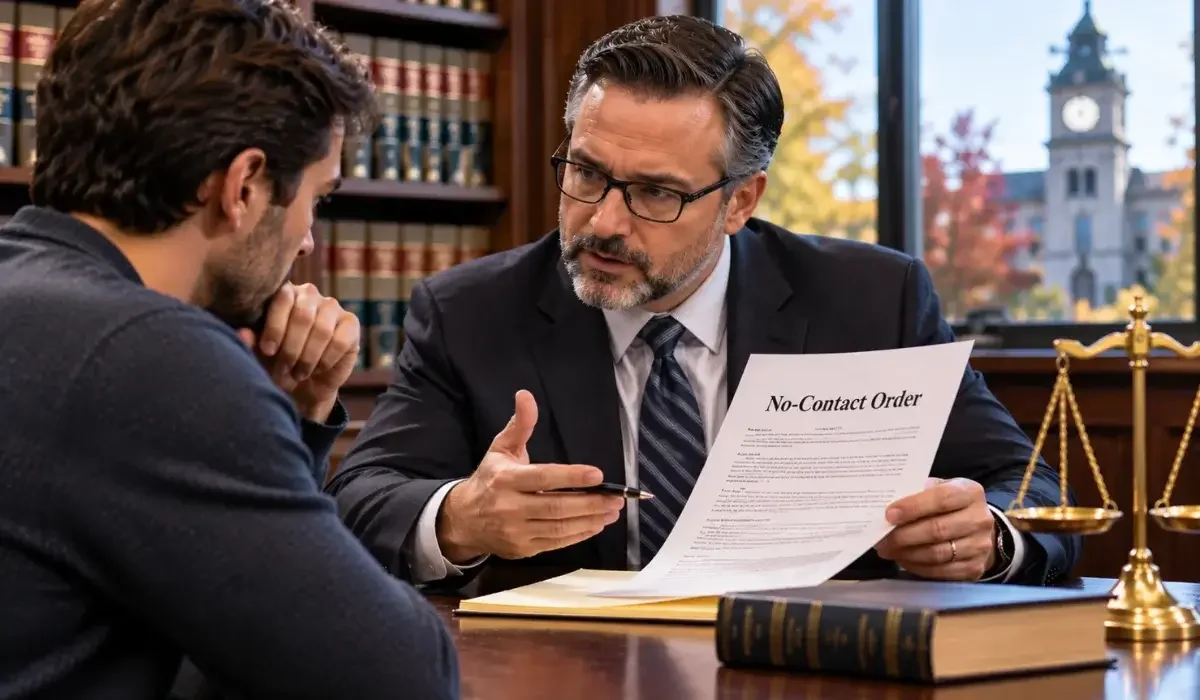
What to Do If You Have a No-Contact Order
Taking a few careful steps can help you avoid a new charge and protect your position in the underlying case.
First, follow the order exactly, even if it feels unfair or inconvenient. Second, avoid all contact, direct and indirect, unless the order specifically allows it. Third, keep any invitations to contact you, such as texts from the protected person, and share them with your attorney rather than responding. Fourth, if your circumstances make the order hard to follow, talk to a lawyer about asking the court to modify it.
When You Need the Order Changed
Life doesn't always fit neatly within an order's terms, especially when children or shared responsibilities are involved. If you need to adjust the order, the right path is through the court. A Bellingham domestic violence attorney can help you request a modification and present your situation clearly, rather than leaving you to navigate an impossible position on your own.
How the Law Office of David A. Nelson Can Help
David A. Nelson has been practicing criminal law for over 30 years. He has successfully represented defendants in murder cases, sex offenses, drug cases, and federal cases, and the firm provides experienced and ethical criminal defense representation across all types of felony cases in Whatcom County.
That experience covers assault cases involving both domestic violence and non-domestic violence, drug cases, sex offenses, property crimes, embezzlement, and other felony cases. No-contact orders often accompany these cases, and a careful approach helps you avoid the mistakes that create new charges. Every case turns on its own facts, so no honest attorney can promise a particular result, but a Bellingham criminal defense lawyer can help you understand your order and protect your rights.
Cost is a fair thing to consider as well. If knowing your expenses up front matters to you, it's worth asking whether an attorney offers a Bellingham flat fee criminal defense arrangement so you can plan with confidence.
Related: How Bail and Pretrial Release Work in Washington Criminal Cases

Getting Help in Whatcom County
A no-contact order is manageable once you understand what it requires and where the common pitfalls lie. With clear guidance, you can follow the order, protect yourself from new charges, and focus on your case. Early legal representation gives you the most options, contact David Nelson today.
This post is intended for general informational purposes only and does not constitute legal advice. Every case is different. If you are facing criminal charges in Whatcom County, contact the Law Office of David A. Nelson to discuss your specific situation.
